Posts

Plum or Japanese Apricot ?

Image
  Maechwisun is the one of my favorite alcoholic beverages made with plume or Japanese apricot. My understanding is that the word ‘plum’ is frequently referred to ‘jadu’ rather than ‘Maesil’ in Korea. However, Maesil is the fruit of the Chinese apricot or Japanese apricot. The origin of the plant is far east Asia and bears fruit with a green color from late May to mid-June. If you leave fruits without harvesting them in a green state, they ripen further and become yellow, which is called Hwangmaesil. Hwangmaesil is less sour and sweeter than ordinary Cheongmaesil. Despite the less sour taste, it is said that the citric acid content is twice as high as that of green fruits. The main production areas of these fruits in Korea include Suncheon, Gwangyang, and Hadong. Since the natural habitat of these plants is Asia and were not found in other English-speaking countries, there is no official word or legitimate translation of them in English. Understandably, both ‘plum’ or ‘Japanes...

Gamjasul in the rugged terrains

Image
  Gangwon-do was named after the first letters of two major cities of the province during the Joseon Dynasty: 'Gangneung' and 'Wonju'. Gangneung and Wonju are major cities in Gangwon-do, with Gangneung ranked third and Wonju first in terms of populations. What reminds you of Gangwon-do? Perhaps, you may associate the area with mountains, rugged terrains, and valleys with pristine water. Indeed, there are many attractions and parks, making it very popular summer destination. Consequently, you may say that there are plenty of places to visit in Gangwon-do, but when it comes to culinary travel, what do you expect? Well…not much except Korean beef from Deakwanryeong ranch, Makguksu, and potatoes. And we went to some restaurants to eat beef. However, you can easily find out many places in Seoul Metropolitan areas serving Korean beef and Makguksu thus having these foods may not be unique experiences at all. Then we found out something that was not available in the Seoul...

Greeting of Four Heavenly Kings and Bitter-Sweet Memory

Image
  On the third day of our stay in Pyeongchang county, we visited the Woljeongsa, which was founded by highly venerated Buddhist monk of Silla. The place was shrouded in the bitter-sweet memory for me. It is the last place that I and my deceased brother visited together when he was alive. The memory of catching fish together in the nearby stream, Odaechen is still quite vivid. We walked the meandering avenue leading up to the main gate of the temple housing four heavenly kings, guardians of the temple. In ~27 years ago, we amazed at the four statues in the beautifully decorated pantheon and their overbearing and charismatic facial expression with demon stamping feet. Now, the temple seemed to be more crowded and bustling, many foreign tourists wearing uniforms for temple stay programs. For me, it is very different and even alienating scene, but the fragrant memory is not gone. The statue of bodhisattva knelt in front of octagonal stone pagoda is the my most favorite ancient Korean a...

Owls are not what they seem

Image
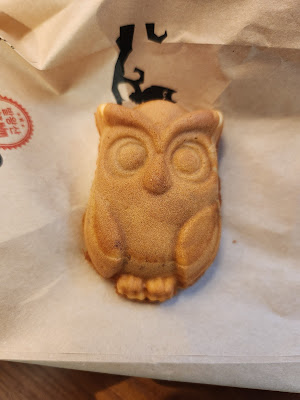
  Yes! Owls are not what they seem. You may be familiar with this quote if you are a fan of American drama ‘Twin Peaks’ produced by a director David Lynch. The photo shows the owl bread, sold in the commercial compartment in the Balwangsan cable car station. Like Bungeoppang, a fish shaped bread that is a popular street food, these breads are stuffed with red bean paste, making it sweet and we enjoyed after tour around the summit of the mountain. The area is a natural habitat of big eagle owl which is a symbol of this mountain. People here believe that the eagle owls are symbol of well being and longevity and this notion is a bit different than the other aspect of these nocturnal birds. Because they are active at night, traditionally people in many areas with different cultural backgrounds consider them mysterious. In some case, even they are thought to be bad omen or manifestation of paranormal forces. Many monarchs of Chosun feared mere hooting of owls in the palace and they he...

Delicious Gastropods; Golbaengis, Godongs and Whelks

Image
  Yungduck mulhoe is the unique Korean seafood restaurant near Youngdeungpo Lotte department store and subway station. There, the chef specializes in Korean East cost style seafoods. One of them is the steamed backgodong (photo I took above). Second photo above shows fermented flounders, which is also very unique way (Kyeungsangdo style) to cook this fish and practiced only in the Yungduk/Phohang areas. Godongs are mainly used as side dish for alcoholic drink, mostly for draft beer in 500 ml glass (famous place is Euljiro in Seoul) due to a chewy and light texture and are easy to cook. They are also good for snacks due to its high protein content and low fat. In Korea, We are familiar with golbangi muchim, which is Korean style sea snail salad, mixed with noodles and hot & spicy sauce. Here, the word ‘golbaengi’ is a dialect of godong and more widely used culinary term than godong or its English translation ‘whelk’. The godongs shown in the picture are commonly called Baekg...

Debates over tentacled creatures

Image
  Cephalopods play an important role in Korean seafood dishes and they are one of my (and Leo’s) favorite dishes. Currently, the global octopus trade is worth over 2.7 billion $. Recently, there are heated debates over octopuses as food ingredients and their farming. The debates over these tentacled animals have started when the Spanish company ‘Nueva Pescanova’ revealed its proposal to open an octopus farm in a harbor in Las Palmas in the Canary Island in 2021. According to media coverages, this proposal is the largest private investment in the history on the island. In the same year ‘Compassion in world farming’ released a report, arguing that octopus farming is cruel and could cause environmental damage to oceans. The report mentions that the experimental trials to farm octopuses reveal that the mortality rate in these systems would be around 20%, meaning that 1 in 5 individuals would not survive the whole production cycle. People against the farming plan mentioned that they f...

Simple, but always our favorite

Image
  Ramen is one of our (me and Leo) most favorite foods. Ramen is arguably the most commonplace instant foods with powder soup separately placed with a chunk of noodle in a plastic bag. In Korea, you can just say "ramen" referring to instant ramen, especially bag ramen. Cup ramen is ramen that is packaged in the paper cup container and can be cooked by pouring water. According to the instruction on the container of cup ramen, we are supposed to wait at least for 3~4 minutes, but I usually was impatient and ate just 2 minutes after pouring hot water. Amazingly, 2 minutes seem to be long enough for cooking. Ramens are also Korea's representative foods that can be found in the menu of small eateries and snack bars. They are usually made with noodles, soup, and various additional ingredients. Common additional ingredients are eggs, onions, and green onions, and rice cakes (eomuks), sausages, and cheese are also added for the purpose of eating more plentifully. At the time of...